Night Frequency: The Late-Night Radio Drama Where the Listener Gets Smaller
Some stories you read. Night Frequency is one you overhear.
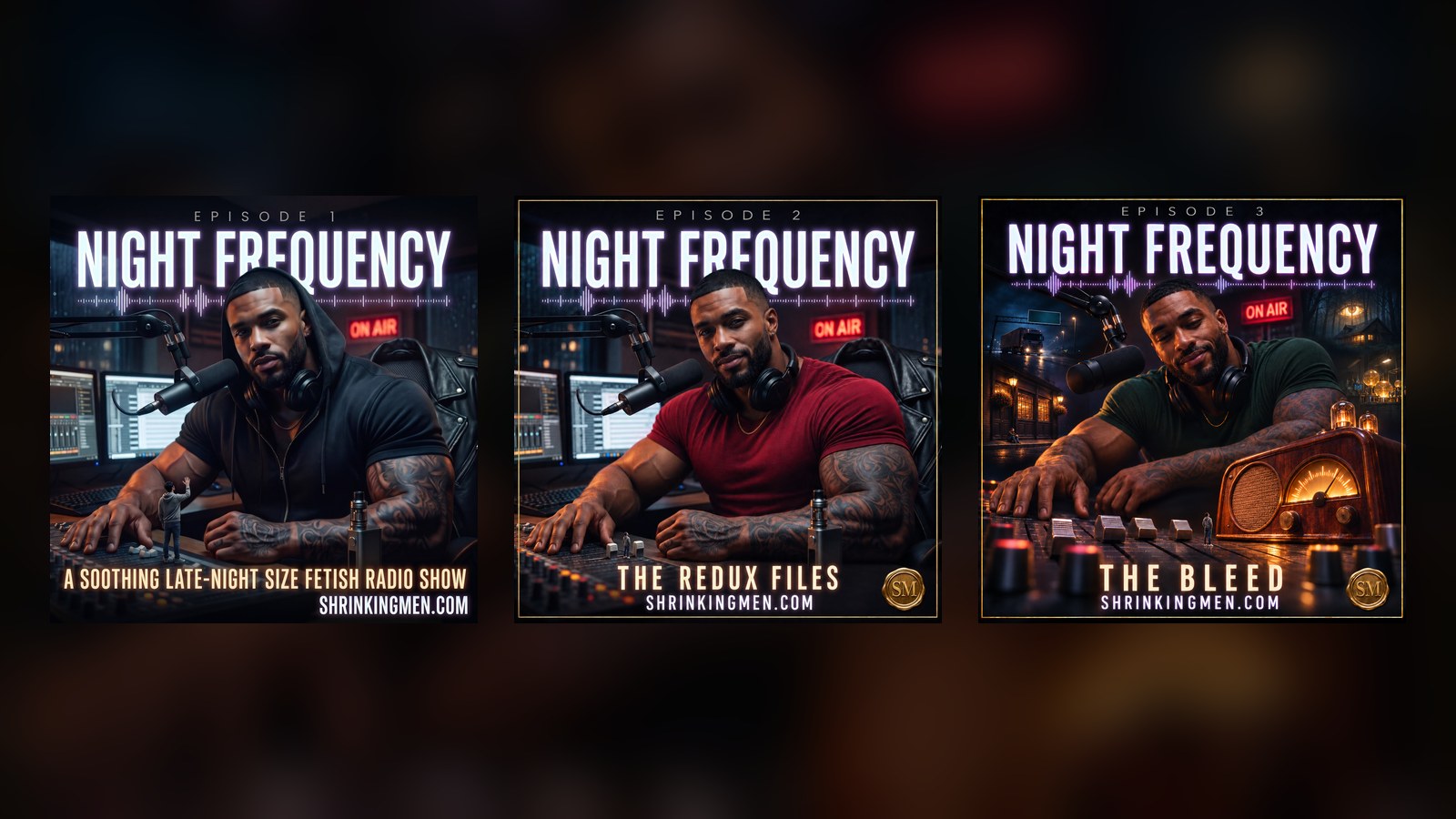
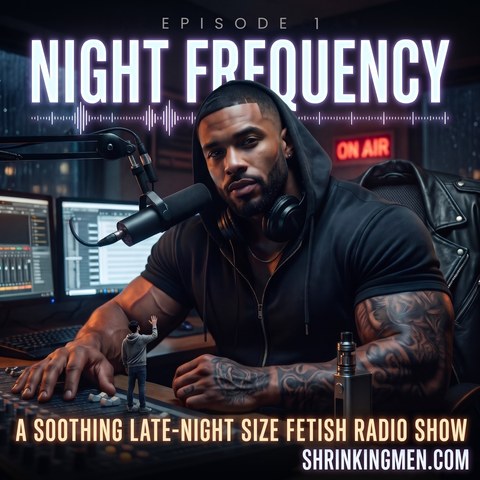
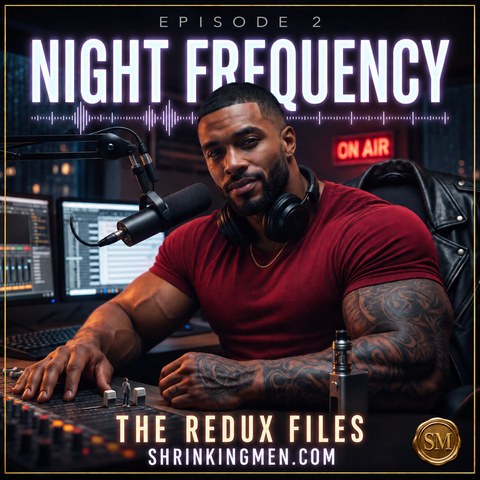
It's past one in the morning. Somewhere in Leeds, a radio presenter with the deepest voice on the dial is taking calls from men who can't sleep. His sound engineer stands about as tall as a thumb, on top of the mixing desk. The callers ring in from lorry cabs and pub car parks and bedrooms, and by the time they hang up, some of them aren't the size they were when they dialled.
That's Night Frequency, our full-cast, late-night size fetish radio show. Three episodes are out, Season 1 runs to ten, and every new episode premieres live on ShrinkingMen Radio, with no pause and no rewind.
This is the story of how it's made, why it's built like a real radio show, and where it's going. Put your headphones on: there are clips.
The best audio dramas feel like something you weren't meant to hear
The great fiction podcasts of the last fifteen years don't sound like stories. They sound like documents.
- Welcome to Night Vale is a community radio bulletin from a desert town where the impossible is local news, read out in the calm voice of its host.
- Limetown and The Black Tapes are investigations: a reporter, a recorder, interviews that don't quite add up.
- The Magnus Archives is a man recording statements. Each episode stands on its own, until you notice they're all part of the same story.
- Homecoming is told through therapy sessions and phone calls, so you piece the plot together from what people say to each other.
- And long before any of them, in 1938, Orson Welles's War of the Worlds went out as a run of breaking news bulletins, and it's still famous for how real it sounded.
What they share is a frame: a reason for the microphone to be there. The recording isn't narration, it's evidence. You're not being told a story, you're listening in on one.
Night Frequency borrows that trick and points it at our favourite subject. The frame is a phone-in show. The evidence is the callers' voices, getting higher and smaller down the line. And the realism makes it hotter: if it sounds like a real broadcast, you can believe, just for an hour, that the man on the radio could do it to you.

Built like a real radio show
Every episode is structured like an overnight programme on a local station, and almost everything you hear has a job to do.
- The callers. They ring from real places with real voices: a lorry driver parked up on the A1 near Wetherby, a lad from Hull, a Scouser, a Geordie. Each one is cast and recorded separately and played down a phone line, so you hear them the way Kwame does.
- The segments. There's the Late Debate, where the lines open on one question ("Would you go through a door if you knew you'd come out smaller?"), Danny's Desk, Size Matters (the only quiz on British radio where the prize is getting smaller), Night Frequency Investigates, and the Close Mic at the end, a slow, whispered finale made for lights off.
- The adverts. Real ad breaks, for real things you can actually buy on ShrinkingMen. That's partly cheeky, and partly the point: in Kwame's world, the Shrink Files are just stories in a shop. Remember that. It matters later.
- The room. Traffic outside, the hum of the desk, Kwame's chair creaking, his mug going down between links. No rain, no swelling orchestra. Under the calls, nothing at all, so the voice on the line has nowhere to hide.
- The continuity. Kwame drinks peppermint tea by the litre. Danny lives in the top-left drawer of the desk and sleeps under one of Kwame's socks. Callers come back. Things mentioned in one episode turn up three episodes later.
And then there's the part no other audio drama can do: we broadcast it live. Each new episode premieres on ShrinkingMen Radio at a set time, and everyone hears it together. You can't scrub ahead or pause to make a cup of tea. The ON AIR sign at the top of the site lights up red, the listeners' names appear in the live room, and at random moments during the show, listeners win trading card points and free copies of the episode. It's the closest thing we have to the feeling of the real late-night radio it's based on: the sense that somebody, somewhere, is listening at the same moment you are.
The two men at the centre of it
Kwame Asante was born in Accra and raised in Bradford, and he's been the late voice on Leeds radio for nine years. He's huge, he's calm, and he's kind. That last part matters. Night Frequency isn't cruel. Kwame is firm, teasing and very sure of himself, but he looks after his listeners. Even the smallest of them.
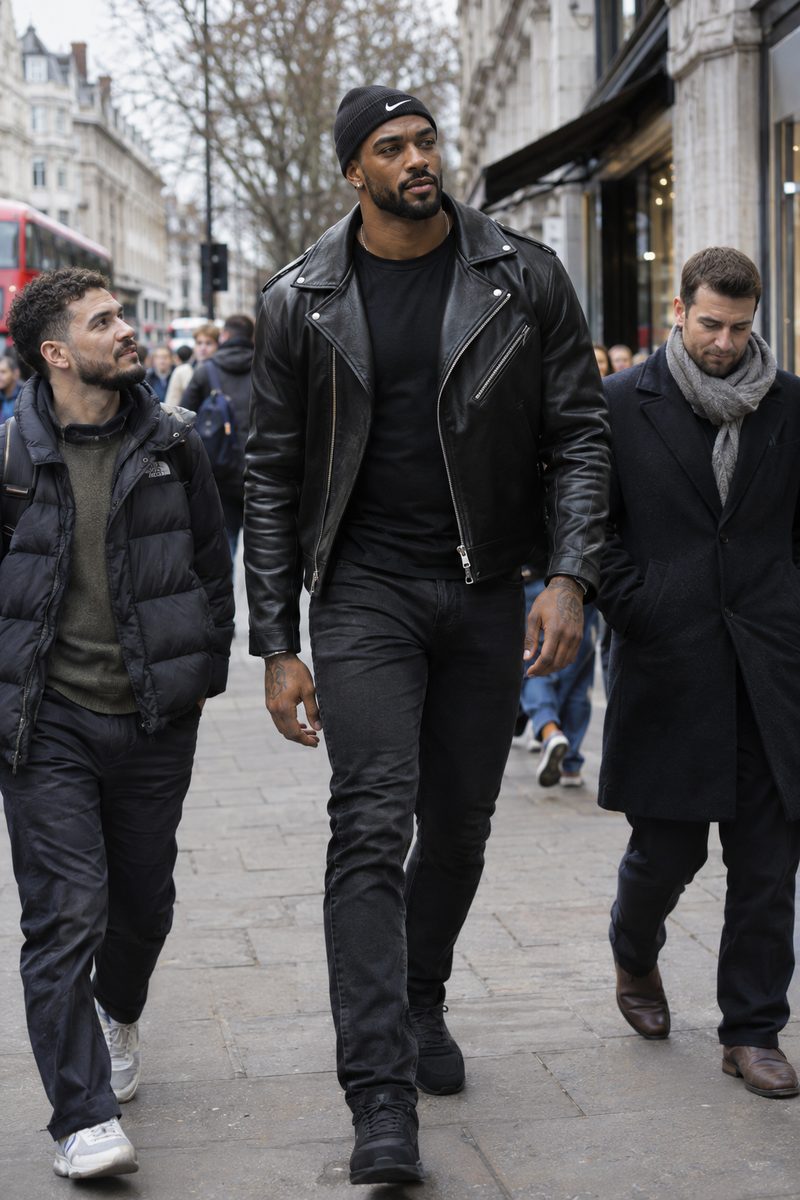
Danny Park used to be his full-size sound engineer. One night, he asked Kwame to "do the voice". Just once, for him. The desk turned into a cliff. Kwame asked if he wanted to go back. Danny said yes. Then he said, "Not yet." He's been saying "not yet" ever since.
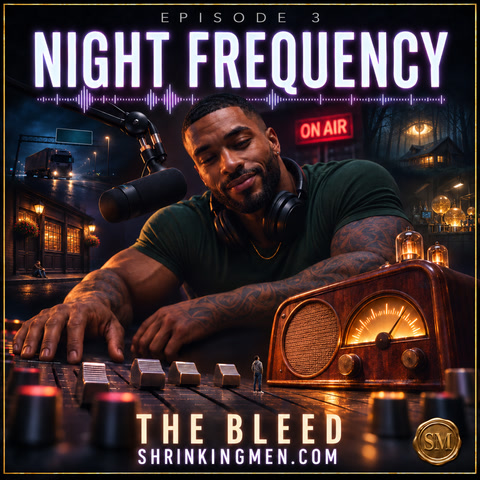
In Episode 3, Kwame finally interviews him on air, with Danny sat in the palm of his hand. It's the most tender five minutes we've made.
If you want the night it happened in full, it's a patrons' story: Danny's origin is in the ShrinkingMen VIP Lounge on Patreon. And if you want to meet Kwame off duty, read our interview with him, recorded at four in the morning in an all-night café.

One story, ten nights
Here's where Night Frequency stops being an anthology. Like The Magnus Archives, every episode stands on its own: you can start anywhere, the callers get their story, and everyone goes home at the Close Mic. But underneath, there's a thread, and it pulls tighter every week.
Episode 1 is a single caller, a man who can't sleep, talked smaller link by link until he's curled up in Kwame's palm. It never explains why Kwame's voice can do that. It doesn't need to, yet.
Episode 2 opens the lines. A cocky Glasgow gym lad, a Scouser who spiked his best mate with a club drug called Redux, a frightened caller three inches tall under his duvet. And Night Frequency Investigates starts digging into where Redux comes from. The investigation never finds the factory.
Episode 3: The Bleed is where it turns. A fader moves on its own before the show. A lorry driver passes a road sign to a town that doesn't exist. An old valve radio on Danny's desk picks up a station that isn't there: an organ, a choir, and a very deep voice, counting. And Andrew, a quiet American, rings from a lodge in a forest where no birds sing. The trees outside keep getting taller.
If that lodge sounds familiar, it should: Andrew and Regan are straight out of Shrink Files 28: Size Lodge. That's the bleed. The worlds the adverts call fiction are getting closer to the studio, and Night Frequency is how they're getting through.

What's coming in Season 1
We're not going to spoil it, but here's the shape of the season. From Episode 4, the voices stop being only on the phone. Each episode, something from one of the Shrink Files worlds comes through into the studio, a little more solid every time:
- Episode 4: a sarcastic young hero who can control his own size crashes onto Danny's desk by accident, and he's the first guest Kwame's voice can't touch. (Catch up with Shrinkwave Issue 1, free.)
- Episode 5: a giant who's sure the whole studio is just a programme he's running. His head goes through the ceiling. (Shrink Files 18: Holo Kink.)
- Episode 6: a scientist arrives with instruments, on purpose, and measures something in Kwame's voice that shouldn't be there. (Size Lodge, again.)
- Episode 7: when the lights come back up, a tall man in velvet is simply there, with a ledger, and a question Kwame can't answer. (Gothic Transformation.)
- Episode 8: the studio turns into a big top, and a ringmaster brings a message. (Fantasy Festival III.)
- Episode 9: for once, nobody comes in. Danny goes out, through the crack, with a microphone, a recorder and a very long cable, and broadcasts live from the other side while Kwame talks him through it.
- Episode 10: the Close Mic. Someone has been listening to Night Frequency all along.
Each one will premiere live on ShrinkingMen Radio before it reaches the shop.

Why audio, and why late at night?
Because size fetish fiction lives in the gap between what you're told and what you picture. A picture shows you the giant. A voice makes you feel him: closer, lower, slower, taking his time.
Audio is also the most private format there is. Nobody reading over your shoulder, no screen glowing in the dark. Just headphones, the lights off, and a voice that knows exactly how small you are. That's why every episode ends on the Close Mic, and why so many of you tell us you've never heard the end of one, because you fell asleep.
Music, made for the show
Night Frequency has its own sound, and Episode 3 is the first to play songs on air: Paperclip Sword, about a man learning to be very, very small, and Crown of Blackened Gold, a dark, gilded theme Kwame plays to darken the room before the Close Mic. Both are in the ShrinkingMen music player, with the rest of our themes and soundtracks, for members and paying patrons.
How to listen
- Live: new episodes premiere on ShrinkingMen Radio. Watch for the ON AIR sign at the top of the site. It's free to listen with a free account, and live listeners can win trading card points and the episode itself.
- Any time: every episode is an MP3 with chapters, to stream in your library or download to keep. Start with Episode 1.
- The gold card: Kwame has his own gold trading card, and you can't buy it. You have to beat him in the Late Show, the Size Showdown he plays between midnight and four in the morning.
-
Audio Night Frequency: Episode 1 £2.50
-
Audio Night Frequency: Episode 2 £1.99
£2.50 -
Audio Night Frequency: Episode 3 £1.99
£2.50


Headphones on. Lights off. And whatever you do, don't hang up.