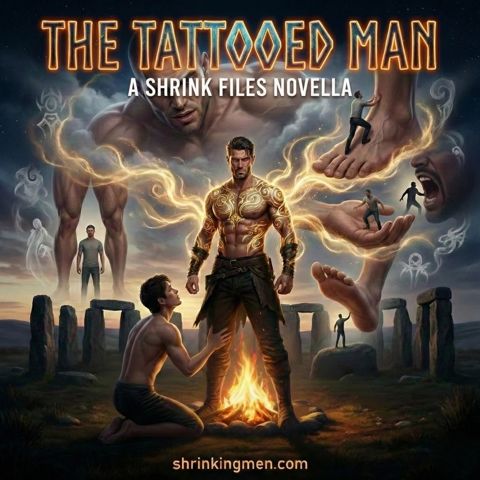
Steve Reeves and the Birth of Beefcake Cinema
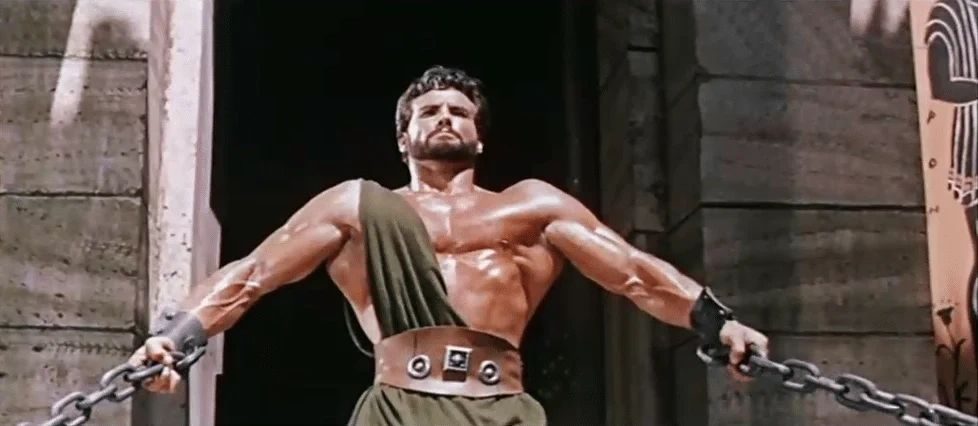
In the pantheon of male physical perfection, one name towers above all others like a bronze colossus astride the ancient world: Steve Reeves. The American bodybuilder who became Europe's highest-paid actor in the late 1950s didn't just play mythological heroes on screen—he embodied them with a physique so perfectly proportioned, so impossibly sculptural, that he redefined masculine beauty for generations. For those of us who worship at the altar of size, strength, and domination, Reeves represents something primal: the fantasy of the giant made flesh, the ordinary man transformed into a god.
The Golden Ratio Made Flesh
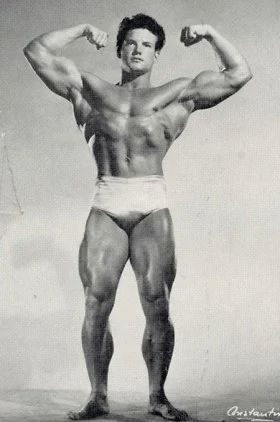
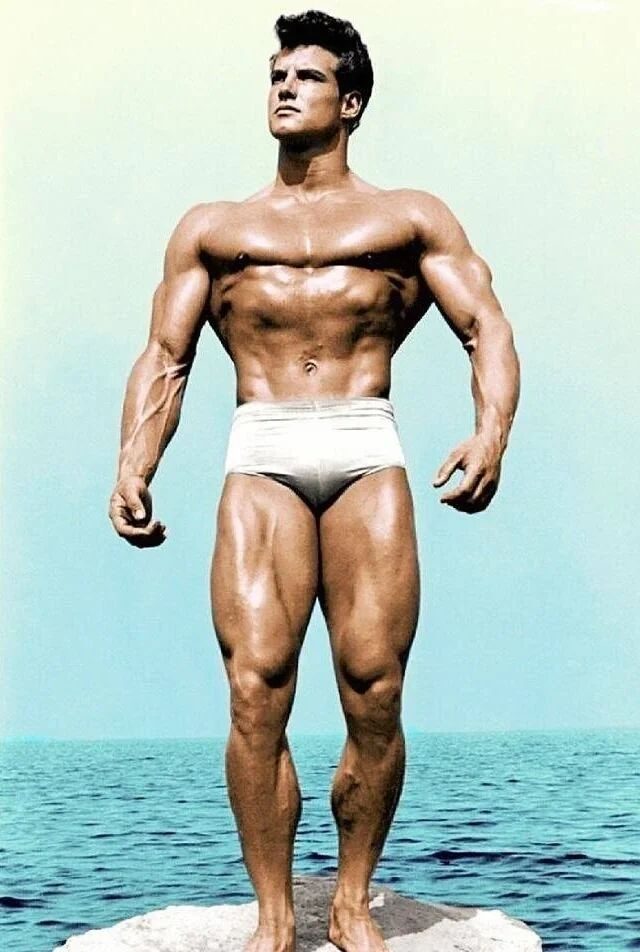
What made Reeves revolutionary wasn't just size—it was symmetry. In an era before steroids became widespread, Reeves achieved what scholars now call "the golden ratio" of bodybuilding. His body was a living sculpture, every muscle group balanced against the others, creating visual poetry from every angle. His shoulders were wide enough to fill a cinema screen, his waist tight enough to make his chest look like architecture itself. This wasn't the bloated, distended look of modern bodybuilding—this was classical perfection, the body Michelangelo would have carved if he'd had living marble to work with.
The measurements tell only part of the story. At his peak, Reeves stood around 6 foot 1 and weighed roughly 215–220 pounds, with measurements that sound almost unreal: arms over 18 inches, a 52-inch chest, thick 26-inch thighs, and a wasp-like 29-inch waist creating that dramatic V-taper so many guys still fantasise about. His arms, calves, and neck all hovered around the same measurement, giving him that harmonious, statuesque look that judges and fans went wild for.
Reeves trained three days per week using full-body workouts, long before split routines and hyper-specialisation took over the bodybuilding world. Sessions could last two to four hours, built around basic compound lifts with strict form and an almost meditative focus. His secret weapon was mental: he talked about deeply concentrating on each muscle as he trained it, visualising the fibres working, swelling, growing. He essentially hypnotised himself into becoming bigger, thicker, stronger.
That idea of visualisation—the mind willing the body into something more—hits right at the heart of transformation fantasies. Reeves didn't just "get fit"; he turned himself into a living god through sheer focus and discipline. For anyone drawn to fantasies of growth and radical physical change, he's a prototype: the man who thought his way into mythical proportions.
From Mr. Universe to Hercules: The Making of a Myth
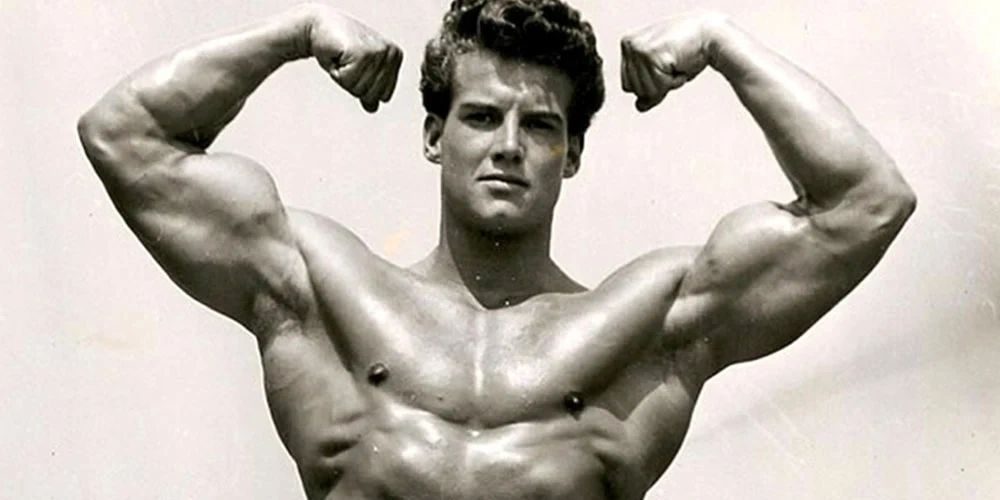
Reeves’s competitive bodybuilding career was short but utterly dominant. He racked up titles like Mr. America (1947), Mr. World (1948), and finally Mr. Universe (1950), where he famously beat Reg Park. What makes that Universe win even more legendary is the story behind it: Reeves had allegedly stepped back from serious bodybuilding to pursue acting, leaning down for the camera because Hollywood types told him he was “too big.”
Then, with only weeks to go before the Mr. Universe contest, he made a decision. He threw himself back into training, slept long nights, ate like a machine, and forced his body to rebound in record time. The result: he walked on stage a stone heavier than he’d been a month earlier, full, hard, and impossibly polished. It’s the kind of sudden, dramatic change that reads like the opening chapters of a fetish story—only for Reeves, it was real.
Hollywood, however, took a detour through Rome. Italian producers were looking for a man who could bring the myths of ancient Greece to life: someone who looked like a statue, breathed, and then picked up a bull. When a producer’s daughter saw Reeves in the 1954 film “Athena,” she knew immediately—this was Hercules. Her father pursued Reeves, and after enough letters and pressure, the American bodybuilder boarded a plane to Italy.
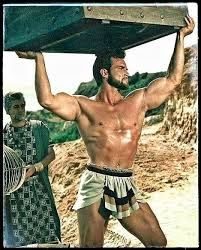
The result was “Le fatiche di Ercole” (The Labours of Hercules), released in Italy in 1957 and in the US in 1959 as “Hercules.” Shot on a relatively modest budget, the film became a box-office phenomenon, raking in multiples of its cost and turning Reeves into the highest-paid male star in Europe for a time. On screen, he moved like a heavy, powerful animal: slow when he wanted to be, explosive when he needed to be, always with that calm, godlike confidence. The leather skirt, the bare chest, the oiled skin—it all created a perfect storm of mythic fantasy and erotic charge.
The Peplum Explosion: Muscles, Myths, and Homoeroticism
“Hercules” sparked what’s now called the peplum or sword-and-sandal boom: a wave of films from the late 1950s into the mid-1960s featuring brawny, barely dressed male heroes from myth and history. Reeves was the figurehead, but he was soon joined by other bodybuilders and strongmen playing Hercules, Maciste, Samson, Goliath, and more. The formula was simple and irresistible: a wandering strongman arrives in an oppressed land, shows off terrifying feats of strength, resists (or succumbs to) the seductions of queens and priestesses, and eventually saves the day by ripping down pillars, smashing armies, or literally throwing monsters around.
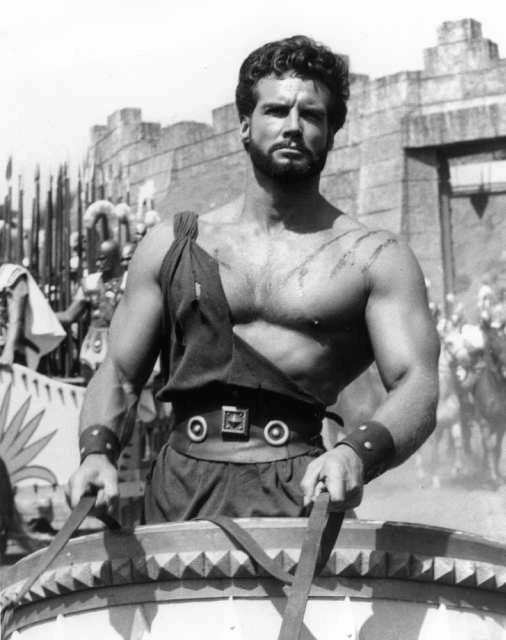
Reeves himself only played Hercules twice—first in “Hercules” and then in “Hercules Unchained.” He didn’t want to be trapped in the same role forever and turned down further offers. Instead, he diversified within the genre: he starred in “Goliath and the Barbarians,” “The Giant of Marathon,” “The White Warrior,” “The Last Days of Pompeii,” “Duel of the Titans,” “The Trojan Horse,” “The Avenger,” and others. Again and again, he appeared as the same archetype: towering, thickly muscled, strong enough to throw men aside like dolls.
These films weren’t shy about what they were selling. Reeves and his fellow peplum stars spent much of their screen time in minimal costumes: short leather tunics or loincloths, sandals, sometimes armour that left the torso completely bare. The camera lingered on their bodies, tracking the swell of a bicep as they hefted a stone, the spread of their lats as they pulled chains apart, the slabs of their thighs as they planted their feet wide in a stance of unshakeable power.
On the surface, these were adventure films for the whole family. Underneath, for anyone with eyes—and especially for gay men and size-fetish fans—they were gleefully homoerotic. Powerful male bodies glistened in the sun, wrestling each other, locked in chains, hoisted onto crosses, forced into labour, then snapping their restraints through sheer strength. The tension between dominance and captivity, strength and vulnerability, played out visually over and over.
Queer film critics have long pointed out how these movies functioned as a safe zone for eroticising the male form. You could sit in a crowded cinema and drink in every flex of Steve Reeves’s chest, every twitch of his thighs, without anyone questioning it. It was Hercules, after all. You were just enjoying the story. That double layer—a socially acceptable excuse wrapped around a very physical kind of desire—is a dynamic that will feel very familiar to visitors of shrinkingmen.com.
The Secret Gay History of Physique Culture
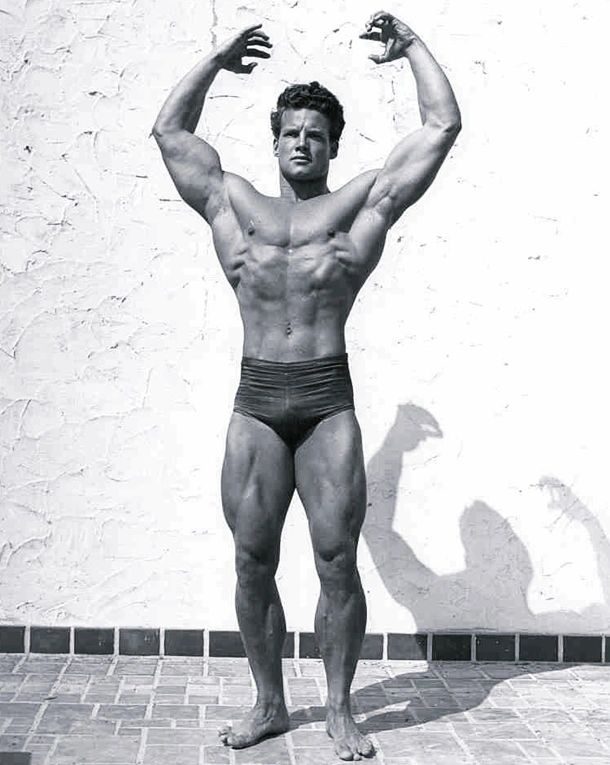
To really understand Reeves’s impact, you have to place him within the wider world of 1950s physique culture. This was the era of the physique magazine: glossy publications filled with photos of young, muscular men posing in tiny trunks or “posing pouches,” sometimes with those pouches literally painted onto the photos to dodge censors. On the surface, these magazines were about health and fitness. In practice, they were some of the only widely available, semi-legal material catering to gay male desire.
Photographers like Bob Mizer and others shot countless images of men who looked like Steve Reeves, or desperately wanted to. Broad shoulders, big chests, solid arms, narrow waists—the aesthetic was Greek statue meets all-American jock. Reeves himself appeared in many bodybuilding and muscle magazines, becoming a sort of template for what a “perfect” male body should look like.
For gay men at the time, these images and Reeves’s film roles were more than just eye candy. They were a lifeline. In a world where homosexuality was criminalised and pathologised, the physique world offered a coded space where desire for other men could be disguised as admiration, aspiration, or “appreciation of health.” Reeves, with his absolute confidence, his heroic framing, and his unimpeachably masculine roles, was a safe object for that desire: you could pin his photo on your wall and call it inspiration.
Modern research into male body ideals and sexuality backs this up. Studies confirm that gay men, on average, tend to favour more heavily muscled bodies than their straight counterparts, particularly emphasising the upper body. The muscular male becomes both object and model: something to lust after and something to become. Reeves, with his golden ratio proportions, embodied that double fantasy perfectly.
Size, Power, and the Fantasy of Transformation
If you run a site like shrinkingmen.com—or you’re one of its regulars—it’s hard not to see Steve Reeves’s story as a live-action version of so many kink narratives. A skinny ranch kid transforms himself into a hulking demigod. He walks into a room and instantly becomes the largest, strongest presence. Men and women alike stare. His shoulders strain costumes; his biceps swell under leather straps; his thighs make other men look small.
On screen, scenes repeatedly push this size difference. Reeves stands surrounded by normal-sized men who look like boys next to him. When he grips an enemy’s shoulders, his hands seem to engulf them. When he lifts someone, they dangle, helpless, like a toy in a giant’s fist. Chains are draped across his chest and wrapped around his arms; when he flexes, they go taut, then snap. If you’re turned on by power dynamics, macro fantasies, or the idea of a body that simply outclasses everyone around it, those moments are rocket fuel.
There’s also something potent in Reeves’s disciplined approach to growth: the idea that you can imagine your way into being bigger, stronger, more dominant. Visualise the muscle, focus on the muscle, and the muscle appears. It’s a kind of consensual self-hypnosis that mirrors lots of erotic hypnosis and transformation fantasies, where suggestion leads to spontaneous growth, swelling, or morphing into something more.
Flip that around, and Reeves also becomes an ideal reference point for fantasies of shrinking and humiliation. Put his massive Hercules frame next to a tiny guy—an inch-tall micro, a shrunken worshipper, a reduced rival—and the scale becomes obscene. His thigh would be a wall. His sandal, a platform. His hand, an entire landscape. The same traits that made him the perfect big-screen hero also make him a perfect mental template for the towering, indifferent giant dominating a tiny, horny speck.
The Price of Godhood: Injuries, Decline, and Death
Of course, no god-body lasts forever. The physical toll of Reeves’s career was immense. He was famous for doing many of his own stunts: wrestling animals, handling huge props, charging into battle scenes over and over. On “The Last Days of Pompeii,” a serious shoulder injury left him with chronic pain that never fully resolved. Over time, those accumulated injuries made the intense training and heavy stunt work harder and harder.
By the mid-1960s, the peplum craze was fading, replaced largely by spaghetti westerns. Reeves tried to transition, co-writing and starring in “A Long Ride from Hell,” but he was already somewhat typecast. He decided, in the end, that his health and sanity mattered more than clawing onto the industry. Friends and contemporaries were dying young, and he didn’t intend to follow the same path.
He walked away. Reeves bought a ranch, raised horses, and devoted himself to promoting natural, drug-free training. He wrote about his methods, advocated for balanced physiques instead of grotesque mass, and became a kind of elder statesman of old-school bodybuilding. The mythic Hercules of the big screen settled into life as a quietly powerful man of the land.
In May 2000, Reeves died at 74, reportedly from complications related to lymphoma and a subsequent blood clot. It was a sudden end for a man whose body had once seemed untouchable. Yet in a way, the contrast only sharpens his legend: mortality came for Hercules, too.
The Immortal Legacy: Reeves in the 21st Century
Even long after his death, Steve Reeves’s shadow looms huge over both bodybuilding and pop culture. Modern “classic physique” divisions in bodybuilding explicitly try to recapture his look: wide shoulders, round muscle bellies, a tight waist, and an overall shape that looks as good relaxed as it does flexed. His measurements are still cited as an ideal. His training philosophy—focusing on aesthetics, avoiding drugs, valuing health—is held up by many as an antidote to the extreme, sometimes monstrous builds seen on today’s biggest stages.
The list of stars he inspired is impressive. Arnold Schwarzenegger has openly called Reeves one of his earliest heroes—he watched Reeves’s Hercules films in cinemas as a kid in Austria and decided that was what a man should look like. That line runs straight through to the present day: The Rock, countless fitness influencers, and legions of gym bros are essentially chasing a modernised version of the Reeves ideal, whether they know it or not.
For queer viewers and fetish fans, his legacy is even more personal. Reeves stands at a crossroads where myth, masculinity, and hidden desire meet. His films gave gay men in the 1950s and 60s permission to stare at the male body, to drink in muscle, size, and strength under the cover of mythological adventure. Physique magazines that echoed his aesthetic provided some of the earliest widespread imagery of idealised male bodies being presented explicitly as objects of admiration.
If you’re into size kink, macro/micro play, or the erotic charge of being utterly overpowered, Steve Reeves is like a founding father. He didn’t just play Hercules; he set the template for every towering, musclebound giant who’s ever bent down to smirk at a much smaller man in your fantasies. From the oiled sheen on his chest to the way he casually handled enemies as if they weighed nothing, everything about him was built to trigger that deep, primal response.
The God Who Walked the Earth
Steve Reeves was more than a champion bodybuilder, more than a sword-and-sandal star. He was the moment where the impossible body became real: a living, breathing proof that a man could look like a myth. His physique set standards that still shape bodybuilding. His films gave generations a socially acceptable way to lust after the male form. His presence in physique culturStSte quietly fed a hidden gay audience starving for images that matched their desires.
For fans of shrinkingmen.com, Reeves is a touchstone. He’s the towering giant, the ultimate alpha, the Herculean figure whose sheer size and strength define the power imbalance at the heart of so many of our favourite fantasies. Whether you imagine growing into his proportions or ending up shrunken at his sandalled feet, looking up along miles of muscle, Steve Reeves gives those fantasies a face and a body.
He proved that gods could walk among men. And for a while, under the Mediterranean sun, wearing nothing much more than a loincloth and a smirk, he did exactly that.
Explore Your Own Muscle Worship Fantasies
If Steve Reeves's story of transformation and muscle dominance has got you hungry for more, dive into our collection of Shrink Files that celebrate the power of massive, growing muscle and the thrill of being overwhelmed by superior size. In Shrink Files Issue 43: Size Swap, gym alpha Jake discovers what it's like when his muscle, height, and cock all shrink away while his closeted crush Tim explodes into a dominant giant—explore this intense tale of muscle theft and reversal at https://shrinkingmen.com/store/p107/shrink-files-issue-43-size-swap.html.
For lovers of extreme muscle growth and worship, Shrink Files Issue 41: Please Eat Me! follows tiny Ryan as he explores every inch of muscular giant Jace's body, from his massive trainers to his towering, smoke-wreathed frame—get your copy at https://shrinkingmen.com/store/p92/shrink-files-issue-41-please-eat-me.html.
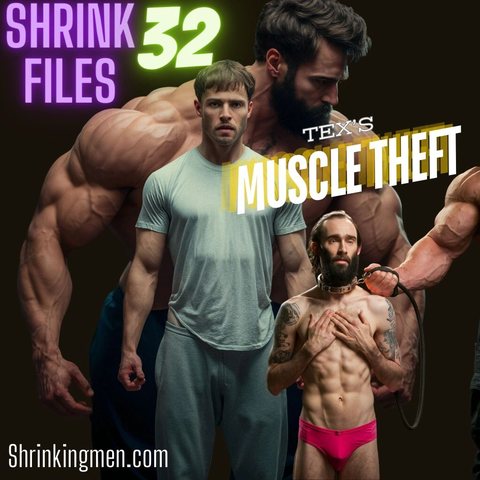
And if you're drawn to the fantasy of a bodybuilder god asserting total dominance over a shrunken plaything, don't miss Shrink Files Issue 20: Micro World, where Dr. Strong discovers a dimension of tiny musclemen and claims bodybuilder Aaron as his personal toy—available now at https://shrinkingmen.com/store/p63/shrink-files-issue-20-micro-world.html. Experience the raw power of muscle theft in Shrink Files Issue 32: Tex's Muscle Theft, where a cocky stud discovers his gains aren't as safe as he thought when his body becomes someone else's prize—grab it at https://shrinkingmen.com/store/ols/products/shrink-files-issue-32-texs-muscle-theft.
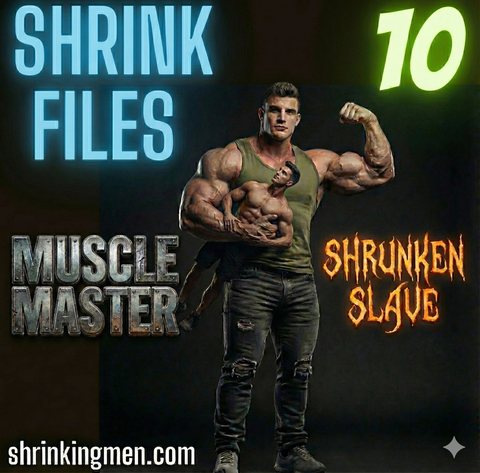
Delve into the ultimate power dynamic in Shrink Files Issue 10: Muscle Master, Shrunken Slave, where bodybuilder Aaron agrees to a muscle worship session that spirals into a world of shrinking, humiliation, and foot worship—claim your copy at https://shrinkingmen.com/store/ols/products/shrink-files-issue-10-muscle-master-shrunken-slave.
Each story delivers thousands of words of explicit, fetish-fuelled fantasy where muscle, size, and power collide in the most intense ways imaginable.